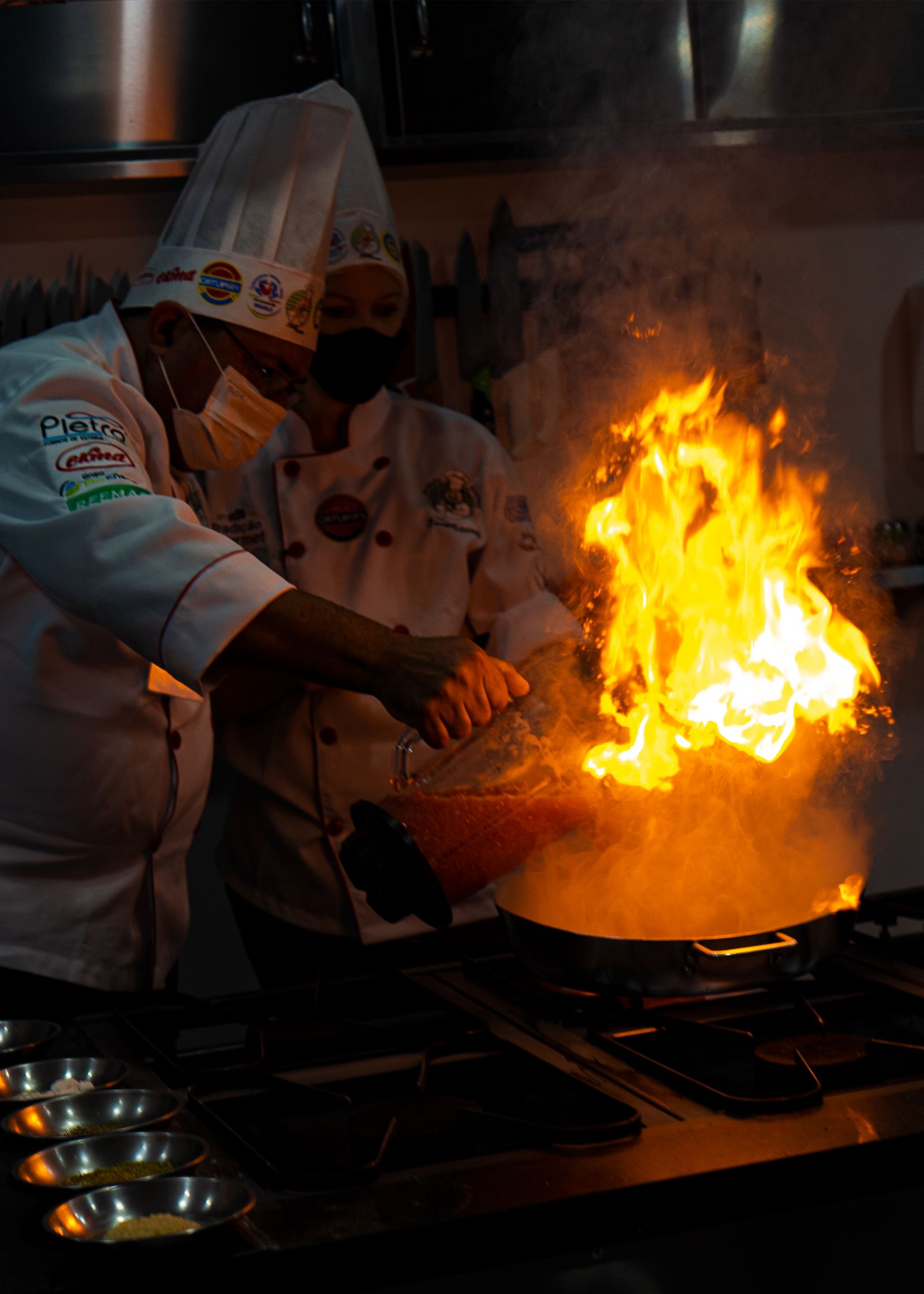
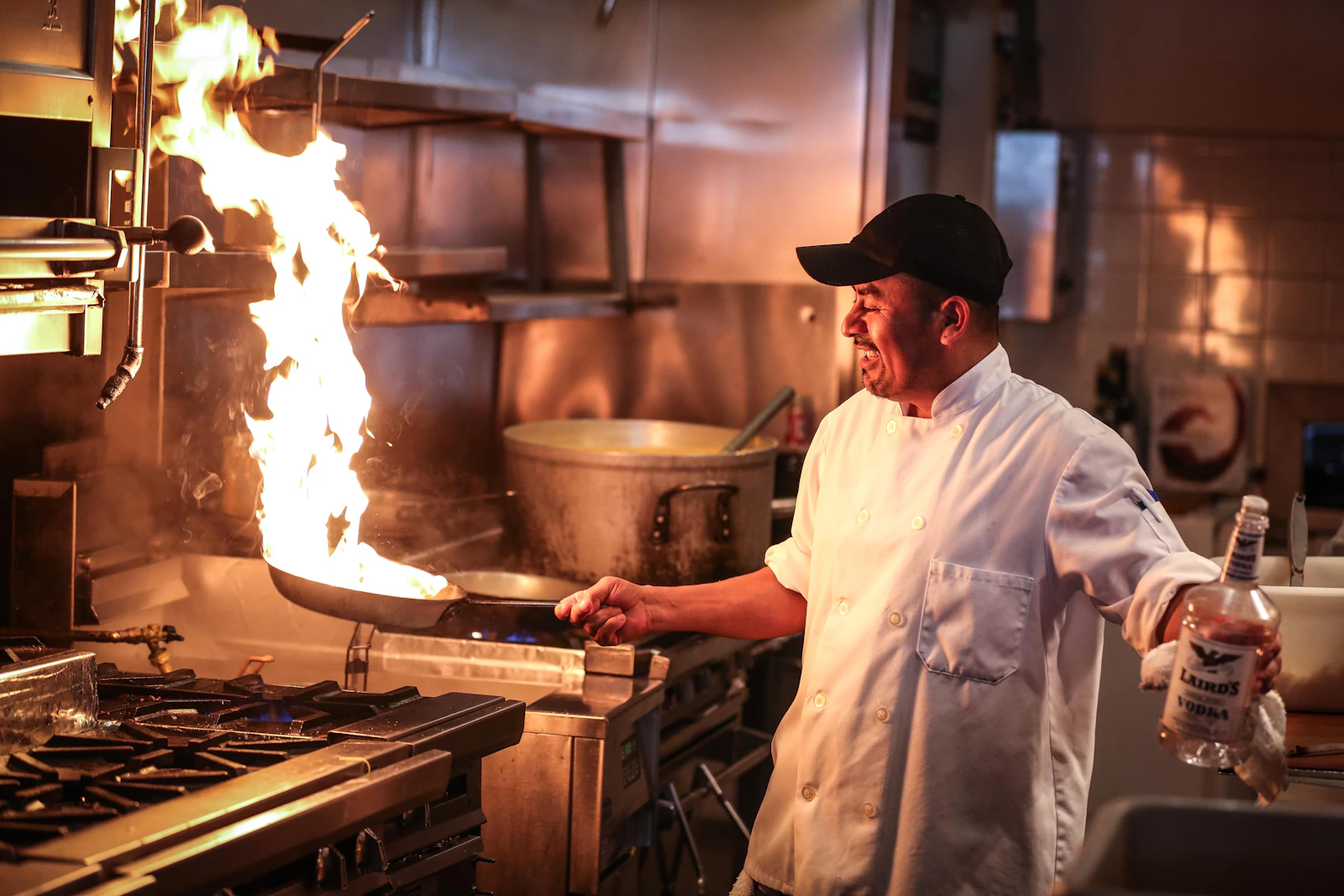
Each cuisine at Desi Recipe has its own kitchen station, its own specialist chef and its own toolkit — from heavy-bottomed deghs and tawa to carbon-steel woks, stone bowls and copper pans. Learn one in depth, or move through all four.
Deshi
Chinese
Korean
International
Kitchen 01 · Deshi
Deshi cuisine, taught with precision
Deshi food is often learned by feel. In a professional kitchen it must be repeatable. Our Deshi kitchen breaks classic dishes into measurable steps — oil temperature for tempering, the exact colour of browned onions, the ratio of yoghurt to spice in a korma — so you can cook the same dish perfectly for two people or two hundred.
You will cook everyday staples and celebration food: bhuna khichuri, morog polao, beef kala bhuna, chingri malai curry, shorshe ilish, a range of bhortas and festive kacchi biryani finished on dum.
Core techniques
Tempering (phoron/tadka)
Bhuna & kasha
Dum cooking & sealing
Rice: polao, khichuri, biryani
Signature dishes
Kacchi biryani
Beef kala bhuna
Chingri malai curry
Shorshe ilish & bhortas
Kitchen 02 · Chinese
Wok heat, knife work and the art of the dumpling
Chinese cooking rewards speed and preparation. You will learn to organise mise en place for fast service, control the intense heat of a commercial wok, velvet proteins for silky texture and build sauces that cling rather than pool.
Our Chinese kitchen covers Cantonese, Sichuan-inspired and the Indo-Chinese dishes popular on restaurant menus — plus a full module on dumplings, buns and dim sum.
Wok hei and heat management on high-pressure burners
Velveting, marinating and oil-blanching proteins
Fried rice, chow mein and noodle soups at volume
Chilli chicken, Manchurian and Indo-Chinese classics
Dumpling doughs, folds, steaming and pan-frying
Kitchen 03 · Korean
Fermentation, balance and the Korean table
Korean cooking is built on fermentation and balance: salty, sweet, sour, spicy and savoury in every meal. You will make the pantry first — kimchi, gochujang-based sauces, doenjang stews — then use it to cook the dishes guests love.
Ferments & pantry
Napa cabbage kimchi, kkakdugi, quick pickles, seasoned sauces and stocks made from scratch.
Rice & noodle dishes
Bibimbap, kimbap, japchae and cold noodles — assembly, seasoning and presentation.
Grill & fry
Bulgogi, galbi marinades, Korean fried chicken and tteokbokki for modern menus.
Kitchen 04 · International
Classical technique for a global menu
The international kitchen gives you the classical vocabulary every chef is expected to know. Learn the French mother sauces, roasting and braising, fresh pasta and risotto, and the modern plating that defines restaurant food today.
A
Sauces
Béchamel, velouté, espagnole, hollandaise and tomato — and the small sauces built from them.
B
Mains
Pan-roasted chicken, seared fish, braised beef and perfectly rested steak.
C
Pasta & grains
Egg pasta by hand and machine, filled pasta, risotto and grain salads.
D
Plating
Composition, colour, sauce work and portion control for fine-dining style plates.
The spice pantry
Know your spices like a chef
Spices are the heart of Deshi cooking and play a quiet role in Chinese, Korean and international food too. Every learner completes a spice module: identifying whole and ground spices by aroma, roasting and grinding your own blends, and understanding when to add each one for the best flavour.
You will make garam masala, panch phoron, Chinese five-spice and a Korean chilli blend from scratch — and learn how freshness, storage and heat change the result.